
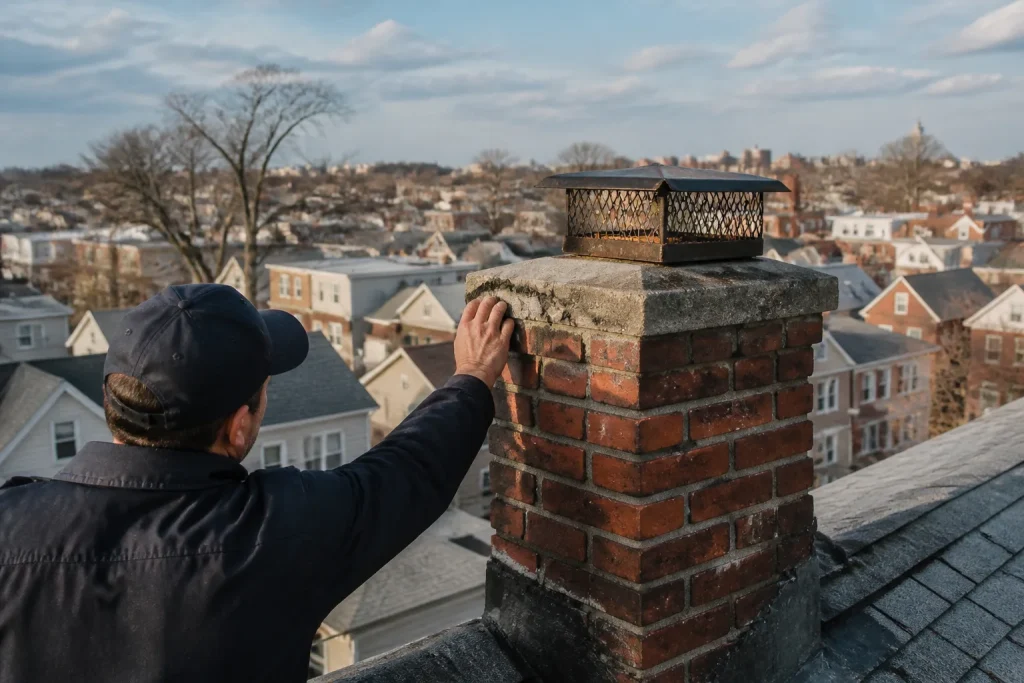
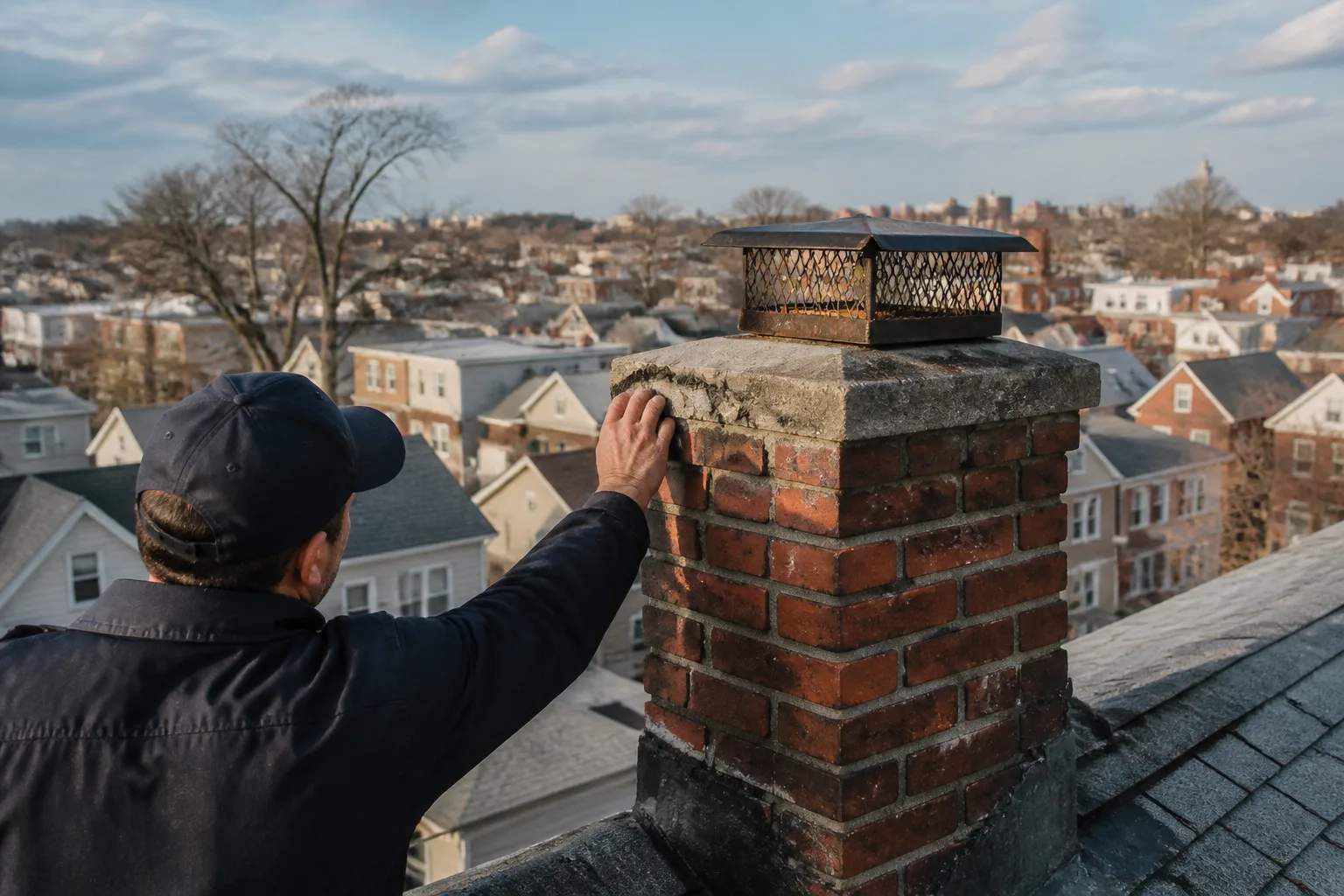
Chimney Sweep: Repair or Replace? How Bensonhurst Homeowners Decide
Replacing a chimney liner when only the top-section tile is cracked can cost two to three times what a stainless insert repair runs. That gap is where most bad chimney advice hides. A sweep crew without liner installation capability will almost always steer you toward full replacement, because a hammer and a shop vac are the only tools they brought. The repair-or-replace question isn’t a gut call. It has a technical decision tree, and once you know the branches, you can hear a sales pitch for what it is.
This is the framework we use when we look at a Bensonhurst chimney. If you’d rather not sort it out yourself, call (855) 924-3713.
What does the inspection actually tell you?
Every repair-or-replace decision starts with the inspection, not the estimate. The governing standard is NFPA 211, which sets the minimum requirements for chimney and venting systems, and New York City’s own code requirements sit alongside it. When a technician hands you findings, those findings should map to one of those standards, not to how the job looked that morning.
Here’s what a level-two inspection should actually produce:
- A video scan of the flue interior, not just a look down from the roof
- Documented condition of the tile joints, including offsets between sections
- Crown and cap assessment, with the depth of any cracking noted
- Firebox and smoke chamber condition, checked below the smoke shelf
- Photos you can see and keep, so the recommendation doesn’t rest on trust alone
If the report is a verbal “you need a new liner” with no scan and no photos, that’s not an inspection. That’s an opinion. In our experience, homeowners in Bensonhurst get pushed toward either unnecessary replacement or deferred repairs that compound, and both come from skipping this step. The findings, not the crew’s inventory, should drive the decision.
The component-by-component decision matrix
Repair or replace isn’t one question for the whole chimney. It’s four or five separate questions, and each component has its own answer. A chimney can need a full reline and still be fine on the crown, or vice versa. Here’s how the pieces break down.
Liner: tile, stainless insert, or cast-in-place
If the clay tiles are sound but one section is cracked, a stainless insert is the proportionate fix. We install DuraFlex flexible liner systems for exactly this, and the failure mode is limited because the original tile stays in place around it. If the flue walls are deteriorated across the length, not just at one joint, HeatShield ceramic flue resurfacing can restore the liner wall without pulling it out. A cast-in-place pour is the heaviest option and belongs on chimneys where the existing flue is structurally compromised. Full tile replacement is the rare case, not the starting point.
Crown: patch, resurface, or full pour
Surface cracking that doesn’t reach the flue can often be patched. If cracking runs through the full depth of the crown, that’s a different animal and the crown needs to come off. CrownCoat-type resurfacing is a middle path when the crown is sound underneath but the top surface has broken down. Full pour is for crowns that have separated from the flue.
Cap: repair or replace
Stainless caps outlast most of what they sit on. Cast or painted-steel caps rust through at the seams and usually warrant replacement rather than welding. Galvanized caps are the ones that fail first. A cap that’s simply loose or missing a screw is a five-minute repair, not a replacement.
Firebox brick: repoint or rebuild
Mortar joints that look worn but hold when you probe them are a repointing job. Brick that’s spalled, crumbling, or soft to the touch is a rebuild. The depth of deterioration, not the surface appearance, decides.
The findings that make repair non-viable
Sometimes replacement is the only honest answer. Here are the specific inspection findings that justify it on structural grounds. If a technician gives you one of these, ask to see the evidence, and expect to see it.
- Liner offset greater than 30% – flue sections that have shifted out of line by more than about a third of their diameter restrict draft and can’t be reliably repaired with an insert or resurfacing
- Crown cracking that extends through full depth – a crown that’s cracked end-to-end leaks water into the flue and needs to come off, not be patched
- Mortar joint deterioration below the smoke shelf – this is in the firebox, where heat exposure is highest and a repointing job won’t hold
- Tile that’s crumbling in multiple sections – if the tiles are failing at several points, not one, patching the visible damage just moves the next repair forward
If none of those fit, repair is almost always the proportionate path. We specify DuraFlex and Copperfield components because they handle the temperature swings a working flue sees and hold up over years of use. That’s a materials decision, not a sales decision. The chimney repair side of our work is built around finding the smallest correct fix, not the largest one.
Bensonhurst’s older housing stock and the clay-tile problem
Most of Bensonhurst’s pre-1960 row homes were built with original clay tile flues sized for coal, wood, or no appliance at all. Then a modern wood insert or gas appliance gets dropped into that flue, and suddenly the flue is undersized for the appliance. This is not a “the tiles look fine so we’ll leave it” situation. If the flue doesn’t meet the venting requirements for the appliance now connected to it, it needs relining for code compliance regardless of whether the tile itself is cracked.
That catches people off guard. We’ve had homeowners point at a clean-looking flue and say, “There’s nothing wrong with it.” There isn’t. There’s also nothing right with it for the appliance sitting in the firebox. The flue and the appliance have to match, or the system doesn’t vent properly. Walking a block of single-family row homes and multi-unit buildings here, that mismatch shows up more often than cracked tile does.
Why serial repair costs more than one liner in the long run
A flue tile with two cracked sections, repaired annually, typically costs more over three years than a stainless liner installed at the first repair decision. The math is simple even without plugging in a price. You pay for the technician’s visit, the patch material, and the labor every year, and the underlying tile keeps failing because patching doesn’t change the condition that caused the crack.
The tradeoff is this: serial repair keeps the flue limping along and spreads the cost, while a liner fixes the problem once. Neither is automatically right. A tile with a small, contained crack and a sound chimney around it can be patched once and watched. A tile with a recurring crack is a bar tab: you can close it now or keep paying interest. When the trajectory points the wrong way, the one-time fix is the cheaper fix.
When to call a pro
You don’t need us for a chimney that hasn’t been looked at in years. You need a trained technician for one that has. A flue that’s been swept, inspected, and scanned is simpler to reason about than one that hasn’t. We answer 24/7. Fast dispatch from 7am to 7pm, Sunday through Friday; we’re closed Saturday.
Our technicians have up to 12 years of experience, and we carry the full set of services: sweeping, inspection, chimney cap & crown work, repair, and fireplace repair. That matters here because a repair-or-replace decision needs a company that can do one or the other, not just recommend the one it can’t do.
Related services in Bensonhurst: a chimney sweep followed by an inspection, both handled by the same crew.
The Bottom Line
Play the odds: if the liner offset is under 30%, the crown hasn’t cracked through its depth, the joints hold below the smoke shelf, and the tile has one contained problem, repair is the right move. If any of those conditions fail, replacement is the honest answer. The inspection and the scan, measured against NFPA 211, are what separate the two. And no legitimate technician should recommend a repair or a replacement without showing you the evidence that supports it.
If you’re in Bensonhurst and need help, Chimney Sweep Bensonhurst offers free estimates. Call (855) 924-3713. We’ll scan the flue, show you what’s there, and tell you which way the framework points.
Find out more about our team and services on the Chimney Sweep Bensonhurst homepage.
Frequently Asked Questions
A chimney sweep in Bensonhurst typically costs $150 to $300, and an inspection with a camera scan usually runs $100 to $250 depending on whether it’s a level-one or level-two inspection. The written estimate sets the final price, and it’s free. Call (855) 924-3713 for an exact quote.
You need a new liner only if the inspection finds a liner offset over 30%, multiple cracked or crumbling sections, or flue walls deteriorated along their length. A single cracked section with sound tiles around it is usually a stainless insert or a HeatShield resurfacing job, not full replacement. Ask to see the scan before you decide. Call (855) 924-3713 for a free estimate.
A chimney should be swept at least once a year when it’s in regular use, and inspected at the same time. If you burn frequently or notice draft problems, a midseason check is worth it. The annual sweep is also when you catch small problems before they turn into replacement decisions. Call (855) 924-3713 to book one.
Skipped maintenance usually means a small crack or a loosened cap goes unchecked until it becomes structural. Creosote builds and restricts draft, and undetected water intrusion through a failed crown or cap damages the flue from the top down. A repair-or-replace decision that could have been a five-minute patch at year one turns into a full reline at year five. Call (855) 924-3713 for a free estimate before that happens.
Written by the team at Chimney Sweep Bensonhurst.
Need Chimney Cleaning Help?
Call Chimney Sweep Bensonhurst - the local pro we connect you with is licensed and insured, with free written estimates in Bensonhurst.
(855) 924-3713