
Last updated November 22, 2026
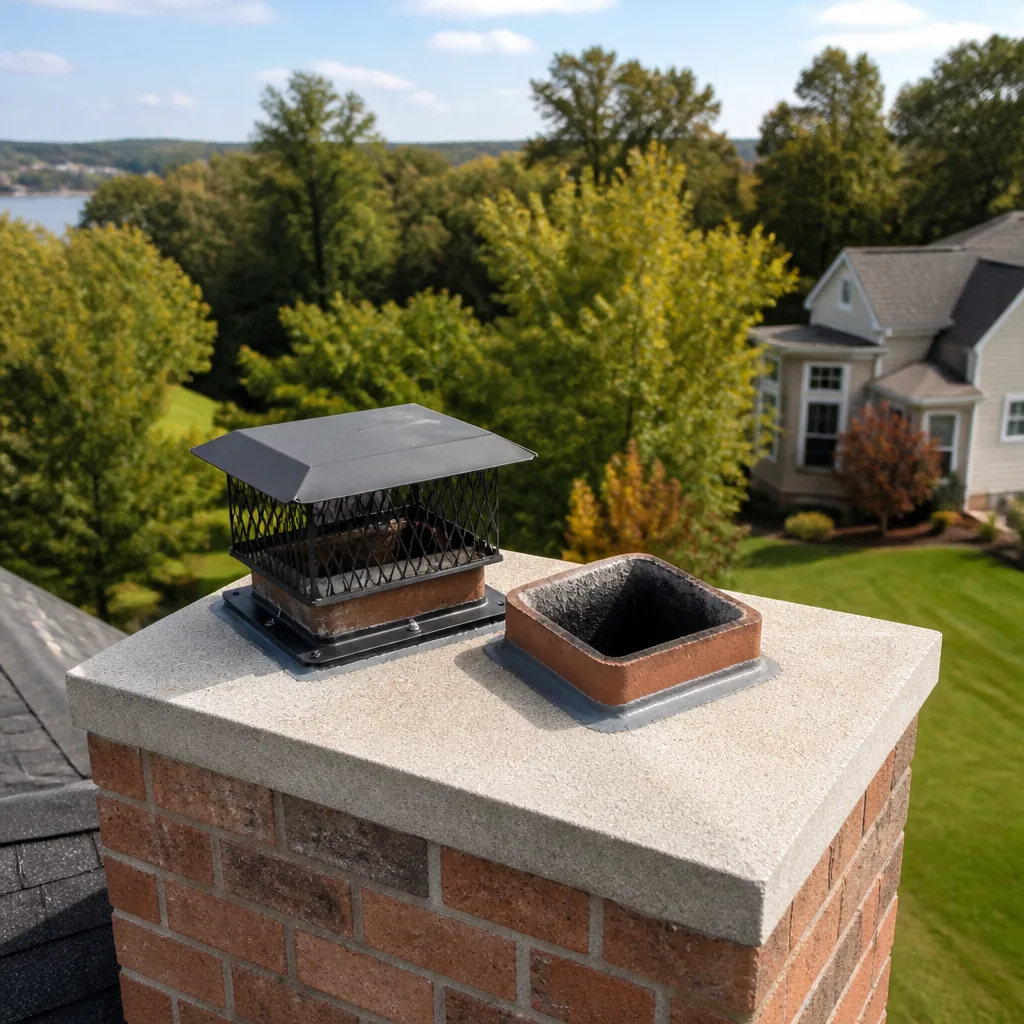 Sweep & inspection
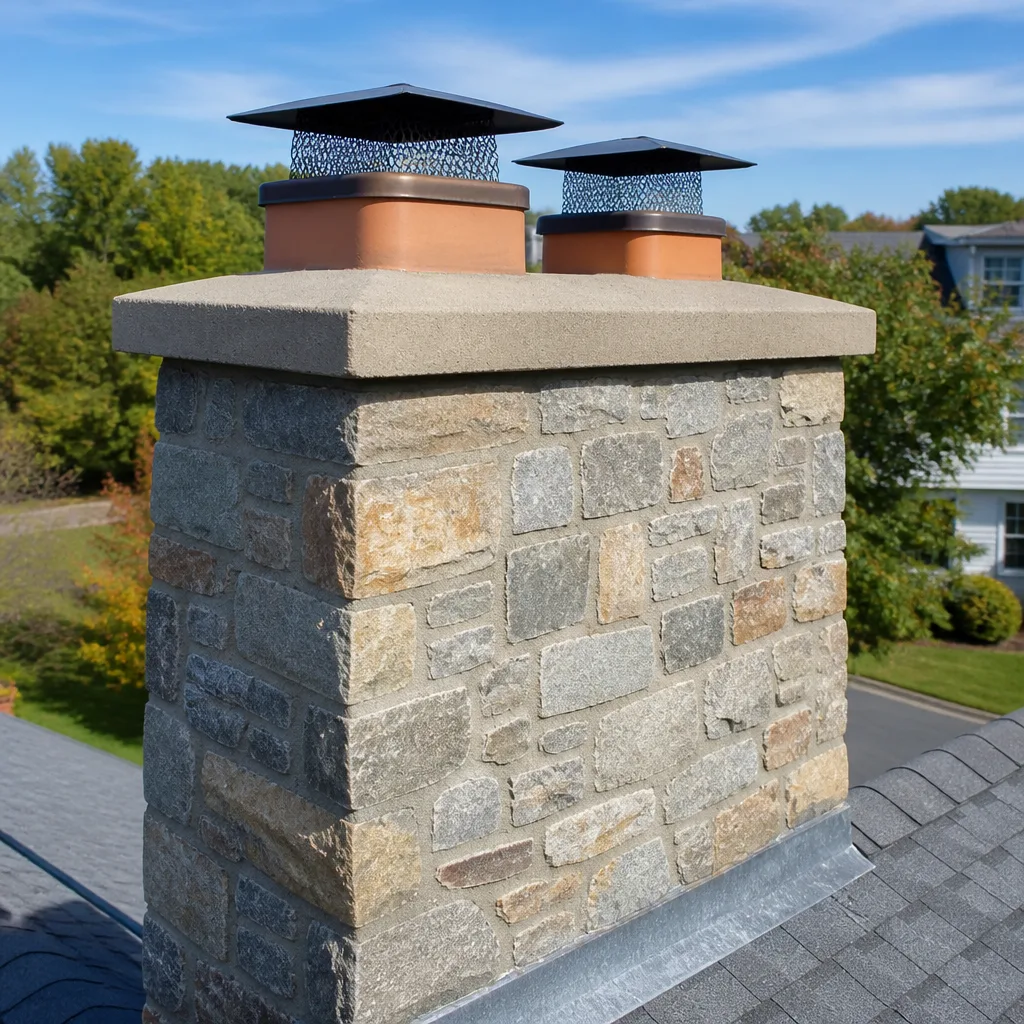 Caps & crowns
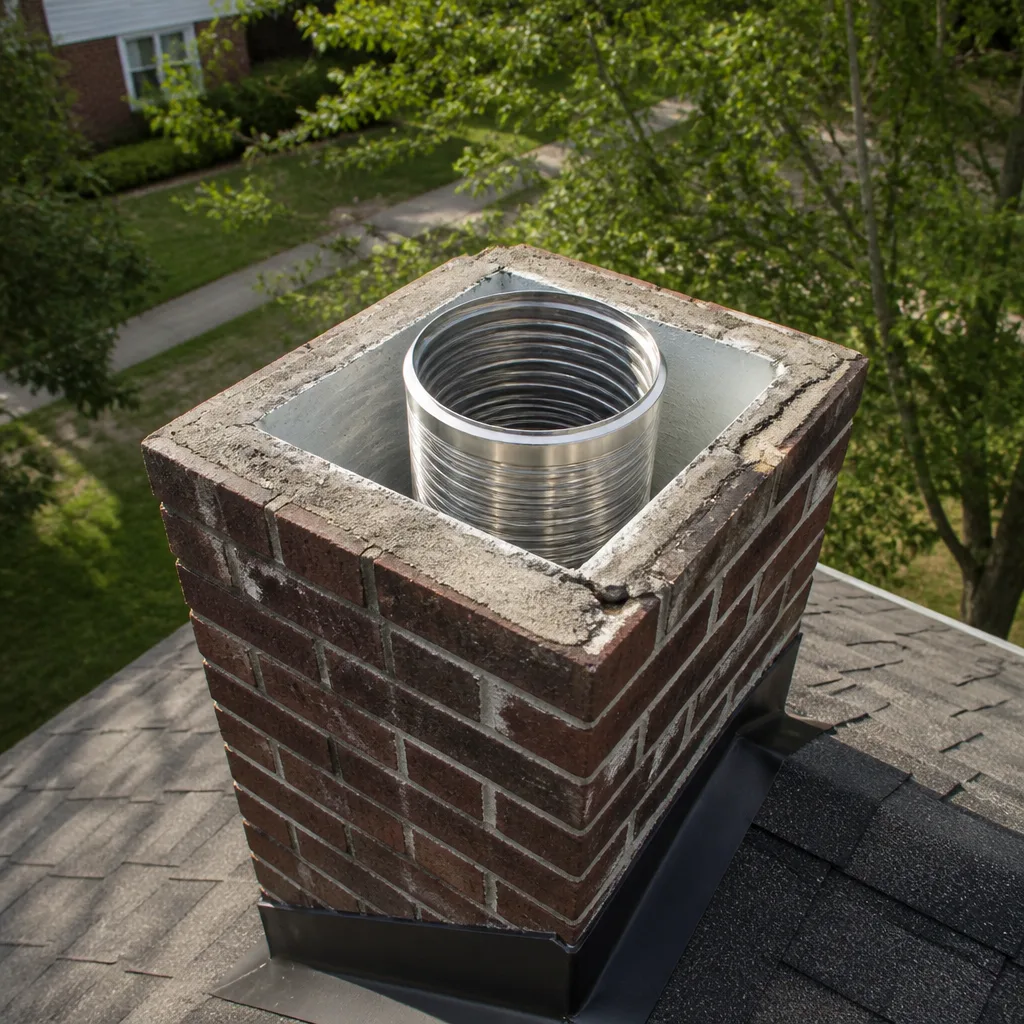 Flue relining
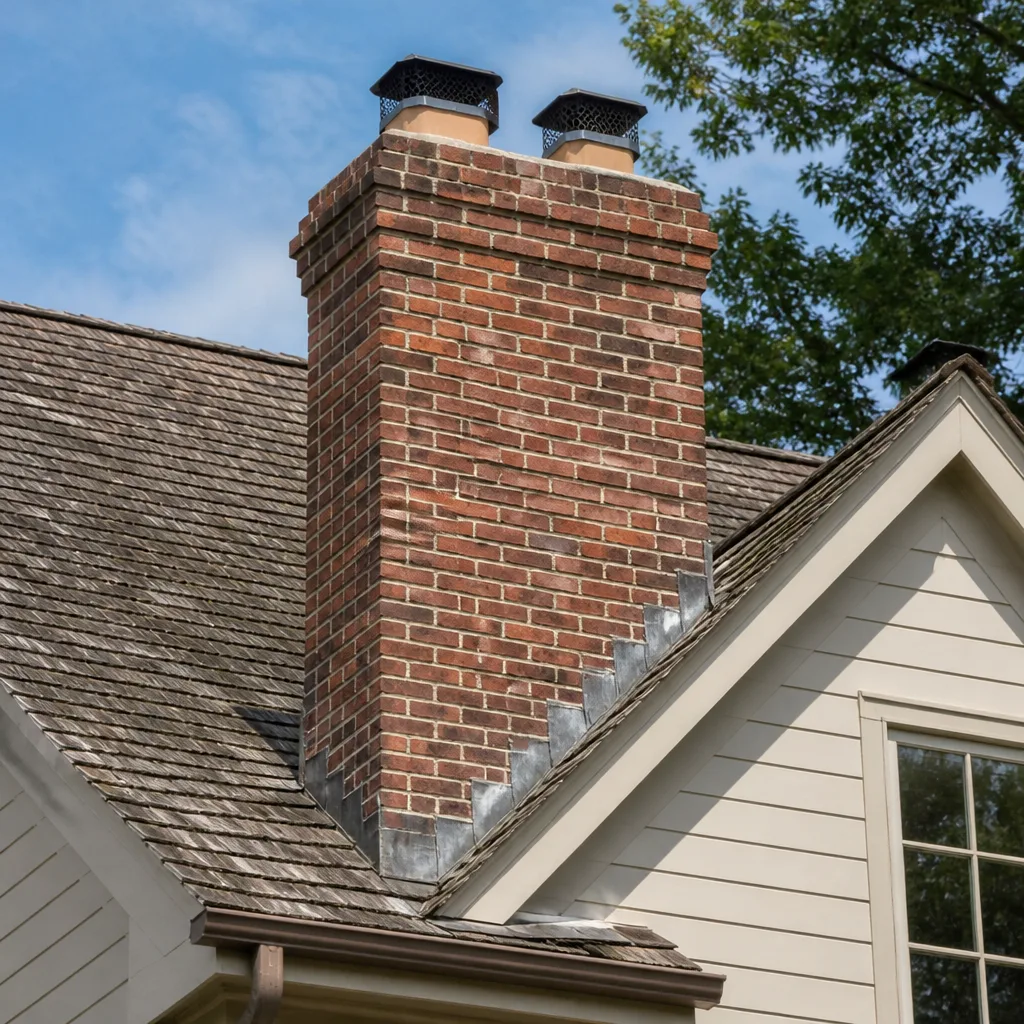 Masonry repair
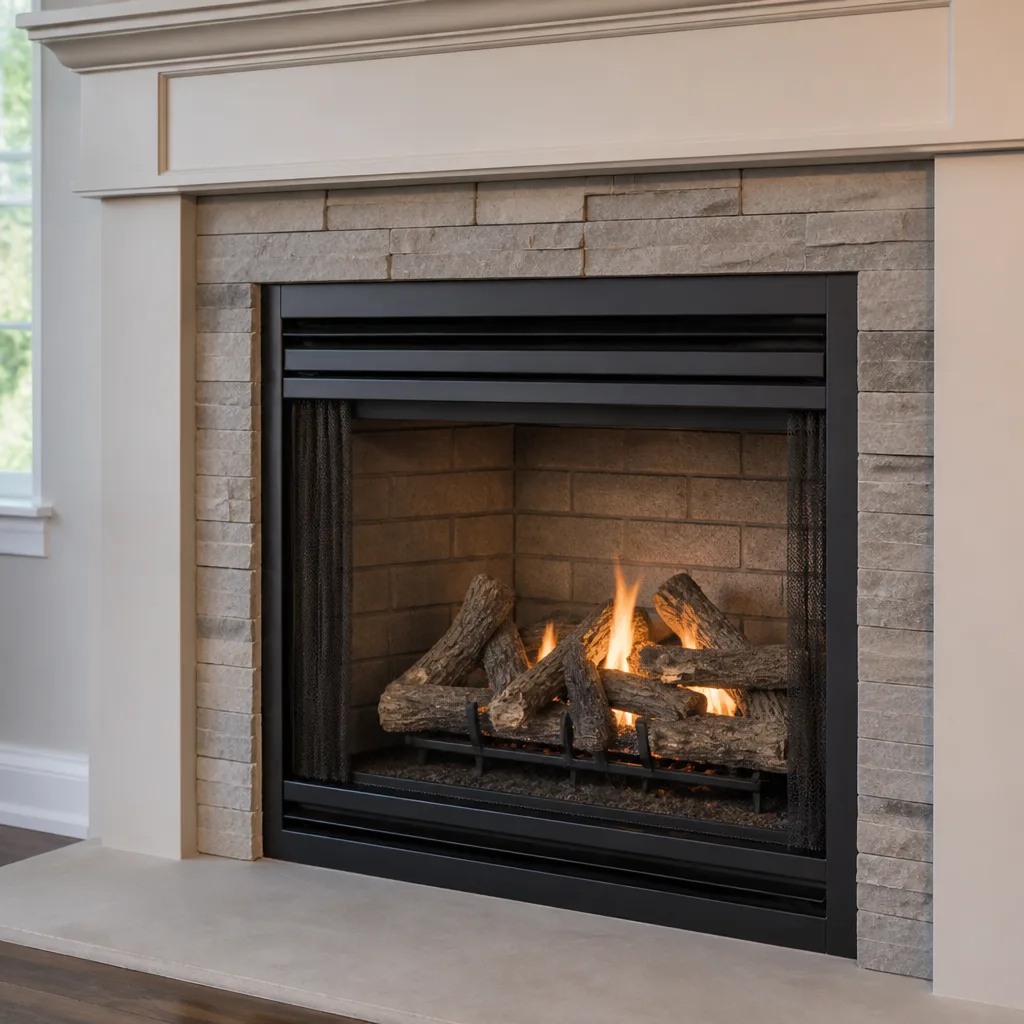 Gas fireplace service
Level 1 sweep and inspection to the NFPA 211 annual standard - flue, crown, cap, and flashing checked and photographed
Chimney sweep logs do not sweep chimneys. They loosen some creosote - which then falls where a brush and vacuum still have to collect it.
Chimney Cleaning Warning Signs: A Bensonhurst Homeowner’s Reference Guide
Most chimney problems announce themselves long before anything fails. The trouble is that homeowners don’t know what they’re looking at, so a white stain on the brick reads as “old house” and a tapping sound in the flue reads as “settling.” Generic lists of signs you need a sweep tell you to look for creosote and call it a day. They don’t tell you what each sign actually means or how fast you need to move. This guide does. We’ll pair each warning sign with its probable cause and its consequence, so you can triage a real problem instead of panicking over a cosmetic one or ignoring something urgent. We’ll keep it specific to Bensonhurst housing stock and the way chimneys behave here.
Quick Answer
The warning signs that matter most are a strong odor from the fireplace when no fire is burning, white staining on the exterior stack, smoke spilling into the room at startup, tapping or flaking sounds inside the flue, and visible separation at firebox joints. Each points to a different failure: draft reversal, water infiltration, a damper or baffle problem, deteriorating clay tile, or structural movement. Some can wait for a scheduled visit. A few mean stop using the fireplace until someone inspects it.
Styles & brands we work with
- Sweep & inspection
- Caps & crowns
- Flue relining
- Masonry repair
- Gas fireplace service
Table of Contents
- Why Does My Fireplace Smell in Summer?
- What Does White Staining on the Chimney Mean?
- Smoke in the Room: Startup Versus Established Fire
- Sounds Inside the Flue and What They Tell You
- Cracked Firebox Joints: Cosmetic or Structural?
- Reading Creosote: Stage, Texture, and Risk
- How to Triage: Which Signs Mean Stop Using the Fireplace
- What a Proper Inspection Actually Covers
Why Does My Fireplace Smell in Summer?
A strong sulfur or ashy smell from a fireplace in July, with no fire burning, is not a cleaning issue. It’s usually a draft reversal: the chimney is pulling air down instead of pushing it up, and it’s bringing the smell of old creosote deposits with it. That points to a compromised damper that no longer seals, a blocked or damaged cap, or a flue that’s lost its thermal lift in warm weather. The consequence is bigger than odor. If the flue is reversing, combustion gases from neighboring appliances can enter the same way.
Summer odor and winter odor mean different things, and this is where most guides stop short.
- Winter odor, when the fireplace is in use, usually means incomplete combustion or a flue that isn’t drafting properly under load. It’s often a firewood or airflow issue and shows up alongside smoke problems.
- Summer odor, with nothing burning, is the more serious signal. It tells you the chimney has lost its one-way airflow. Creosote deposits that stayed sealed up all winter are now off-gassing into the house.
In Bensonhurst’s older rowhouses, the damper is frequently the culprit. Decades of heat and moisture warp the damper plate so it no longer seats flush, and a gap of a quarter inch is enough to reverse the draft on a humid July afternoon. A blocked cap does the same thing from the top: if debris, a bird nest, or a collapsed cap screen closes the flue, the chimney has nowhere to push air and pulls it down through the house instead. When we look at a summer odor complaint, we check the damper seal and the cap condition before anything else, because those two account for most of what we find. If you’re seeing this, a chimney cap & crown inspection is often the fastest way to rule out the top-end cause.
What Does White Staining on the Chimney Mean?
White, chalky staining on the exterior of a chimney stack is efflorescence, and it confirms that water is moving through the masonry. It does not tell you where the water is entering or how far the damage has gone. That takes probing: checking the crown for cracks, the flashing at the roofline, the brick joints, and the interior of the flue itself. Efflorescence is the visible symptom of a process called spalling, where water absorbed into the brick freezes, expands, and pushes the face of the brick off.
What efflorescence confirms:
- Moisture is migrating through the masonry and evaporating at the surface, leaving mineral salts behind.
- The chimney has a water entry point somewhere, whether at the crown, the flashing, or the brick itself.
- The process is active. Fresh white bloom means water is currently moving.
What it doesn’t tell you without probing:
- Whether the water is coming from above (a cracked crown or failed flashing) or from inside (condensation from an unlined or poorly venting flue).
- Whether the clay tile liner has already been affected. Water that reaches the liner can freeze and crack tiles, and that damage isn’t visible from outside.
- How much of the brick face has already spalled. Surface bloom can hide significant loss of brick material underneath.
Bensonhurst’s freeze-thaw cycles are hard on exterior masonry. A chimney that looks fine in October can show spalling by February if the crown has a hairline crack letting water in. When we see efflorescence, we probe the mortar joints and check the crown and flashing before recommending any repair, because resurfacing a stack that’s still taking on water is wasted work. A proper chimney repair starts with finding the entry point, not painting over the stain.
Smoke in the Room: Startup Versus Established Fire
Smoke spilling into the room at startup and smoke spilling into the room after the fire is established are two different problems, and knowing which you have saves you a wasted service call. Startup smoke, the puff that rolls out when you first light the fire, is usually a draft problem: the flue is cold and hasn’t established its upward draft yet. Smoke that appears after the fire has been burning steadily for twenty minutes or more is a different animal. That points to a blockage, a damper that’s not fully open, a baffle out of position, or a flue that’s undersized for the firebox.
Here’s how to tell them apart:
- Light the fire and watch the first two minutes. A little smoke at the very start that clears once the fire catches is normal, especially in a cold flue.
- Let the fire burn steadily for twenty minutes. If smoke is still rolling into the room at that point, it’s not a cold-flue issue.
- Check the damper position. A damper that’s open but not fully open, or one that’s warped and binding, restricts the flue opening. That’s a mechanical problem, not a draft problem.
- Look at the fire itself. A lazy, smoldering fire with visible smoke means incomplete combustion. That’s often wet wood or a baffle that’s out of position, deflecting air away from the fire.
In our experience, Bensonhurst homeowners with gas fireplaces often mistake startup smoke for a damper problem when the real issue is a blocked vent termination or a baffle that’s been knocked out of place. Gas units don’t produce the same visible smoke, but they do produce exhaust that can back-draft if the termination is blocked. For wood-burning fireplaces, the startup-versus-established distinction is the single most useful diagnostic you can make before calling. It tells us whether we’re looking at airflow, mechanical restriction, or combustion quality, and it changes what tools we bring.
Sounds Inside the Flue and What They Tell You
Tapping, flaking, or shifting sounds from inside the flue are the sound of a clay tile liner in trouble. In Bensonhurst’s older rowhouse stacks, the liner is typically clay tile set in mortar joints, and those joints are the weak point. When a joint fails, tiles can shift slightly, and you hear it as a faint click or scrape when the chimney heats and cools. Flaking sounds, like something gritty sliding down the inside of the flue, usually mean the inner face of a tile is spalling and shedding material.
What each sound points to:
- Tapping or clicking during heat-up and cool-down: tiles expanding and contracting against a joint that’s lost its mortar. The tiles are moving because they’re no longer held rigid.
- Flaking or gritty sliding: the inner face of a clay tile is spalling. The tile is breaking down from the inside, often from moisture or repeated thermal cycling.
- A single heavy shift or thud: a tile has come loose and dropped. That’s an immediate stop-use situation, because a displaced tile can block the flue or leave a gap where heat reaches the surrounding structure.
The consequence of a failing clay tile liner is that combustion gases and heat can reach the masonry and the wood framing around the chimney. That’s the path to a chimney fire spreading into the structure. This is where a basic sweep company stops and refers you out. It’s a liner problem, and liner problems are solved with relining, not sweeping. We install DuraFlex flexible liner systems for exactly this situation, and for liners that are deteriorating but still structurally sound, we apply HeatShield ceramic flue-resurfacing, a specialist method that restores the liner wall without a full replacement. Most sweep-only companies aren’t equipped for either. If you’re hearing sounds in the flue, the right call is a camera inspection that shows you the tile joints on a screen, not a guess.
Cracked Firebox Joints: Cosmetic or Structural?
A crack in the firebox mortar is cosmetic when it’s a hairline in the refractory mortar between firebrick, and structural when the firebrick itself has separated from the surrounding masonry. The distinction matters because the firebox is the one part of the chimney that holds fire directly. Cosmetic mortar cracks can be repointed. Structural separation means the firebox is no longer containing heat the way it was built to, and that’s a stop-use condition until it’s repaired.
How to tell them apart:
- Look at the width and the edges. A hairline crack with sharp, tight edges in the mortar joint is usually cosmetic. A crack with crumbling or missing mortar, or one wider than a business card edge, needs a closer look.
- Check whether the firebrick has moved. If the brick faces are no longer flush with each other, or if a brick rocks when you press lightly on it, the joint has separated structurally.
- Look for gaps at the perimeter. A gap between the firebox wall and the surrounding masonry, especially at the top or sides, means the firebox has pulled away from the structure.
- Check for rust or staining on the firebox floor. That can indicate moisture reaching the firebox from a failing liner above, which changes the repair scope.
A structural firebox separation is the kind of thing that has to be repaired before the next fire. Heat that escapes the firebox reaches the masonry and framing directly. When we assess a firebox, we probe the joints and check the liner above, because a firebox crack is often the visible end of a liner problem that starts higher up. Cosmetic mortar cracks get repointed with refractory mortar. Structural separation gets a proper repair, and we won’t tell you it’s structural unless you can see the evidence yourself.
Reading Creosote: Stage, Texture, and Risk
Creosote is the residue of incomplete wood combustion, and it builds up in the flue in recognizable stages. Knowing which stage you’re looking at tells you how urgent a sweep is, because the stages carry very different fire risk. Stage one is a light, sooty dust that brushes off easily. Stage two is a flaky, crusty deposit that’s harder to remove. Stage three is a glazed, hardened coating that looks like tar and is the most flammable form.
- Stage one (soot): light, powdery, brushes out. A normal annual sweep handles it.
- Stage two (flake): crusty and flaky, often with a visible texture. Still sweepable, but the flue has been running inefficiently.
- Stage three (glaze): hard, shiny, tar-like. Highly flammable and harder to remove. A glazed flue is a fire waiting for a hot enough burn.
Creosote stage is driven by how the fire burns, not just how often. A fire that’s run with the damper partly closed, or with unseasoned wood, produces more creosote than a hot, clean-burning fire. In Bensonhurst, where many fireplaces are used for evening ambiance rather than primary heat, the fires tend to be short and cool, which is exactly the condition that builds stage two and three deposits fastest. The glazed stage is the one that matters most for fire risk, and it’s also the one homeowners are least likely to see, because it forms high in the flue where a flashlight from the firebox doesn’t reach. A camera inspection is the only reliable way to know which stage you have. We include camera inspection and a photo report with every sweep, so you see the flue condition yourself rather than taking our word for it.
How to Triage: Which Signs Mean Stop Using the Fireplace
Not every warning sign means stop. Some mean schedule a visit soon. A few mean don’t light another fire until someone has looked at it. Here’s how we triage the signs in this guide, in order of urgency.
Stop using the fireplace now:
- A heavy shift or thud inside the flue, or any sign that a tile has dropped.
- Structural separation at the firebox, where firebrick has moved or pulled away from the masonry.
- Smoke rolling into the room steadily after the fire is established, especially if it’s accompanied by a strong draft reversal in warm weather.
- Visible damage to the chimney structure after a storm, including a displaced cap or cracked crown.
Schedule a visit soon:
- Summer odor from the fireplace with no fire burning, which points to draft reversal.
- Efflorescence on the exterior stack, which confirms active water infiltration.
- Tapping or clicking sounds during heat-up and cool-down.
- Stage three glazed creosote visible on camera inspection.
Monitor and address at the next scheduled visit:
- Hairline mortar cracks in the firebox with tight edges and no brick movement.
- Light soot deposits in the flue at the annual sweep.
- A little startup smoke that clears once the fire catches.
The triage matters because the cost of guessing wrong is asymmetric. A cosmetic mortar crack that waits for the annual visit costs nothing extra. A structural firebox separation that gets used anyway can lead to a chimney fire that spreads. The full picture of what we check is covered in our chimney sweep service, which pairs the cleaning with the inspection that tells you which category you’re in.
What a Proper Inspection Actually Covers
A proper chimney inspection covers the flue from the firebox to the cap, the firebox itself, the damper and smoke chamber, the exterior stack, the crown, and the flashing at the roofline. It uses a camera to see the parts of the flue you can’t reach with a flashlight, and it ends with a report that shows you what was found, with photos. An inspection that only looks up from the firebox with a light is not a full inspection, because it can’t see the upper flue where glazed creosote and cracked tile joints form.
What a full inspection should include:
- A camera scan of the full flue length, from the smoke chamber to the cap.
- A check of the firebox for mortar cracks and structural separation.
- A damper check, including whether it seals fully when closed.
- An exterior check of the stack, crown, and flashing.
- A written or photo report of what was found and what, if anything, needs repair.
This is where we differ from a basic sweep visit. A sweep cleans the flue. An inspection tells you what condition it’s in and what’s coming. Both matter, and both belong in the same visit. If the inspection finds a failing liner, we can reline it with DuraFlex. If it finds deteriorated liner walls that are still sound, we can apply HeatShield resurfacing. If it finds a failing crown or cap, we replace it using professional-grade components from Gelco, Olympia Chimney, or Copperfield, matched to the chimney’s specific configuration rather than a one-size part. The point is that the diagnosis and the repair happen in one relationship, not a sweep followed by a referral. For the broader picture of how we approach the whole system, see Chimney Sweep Bensonhurst.
Common Mistakes to Avoid
- Treating summer odor as a cleaning issue. A sulfur smell in July with no fire burning is a draft reversal, not a dirty flue. Booking a sweep for it misses the actual cause, which is usually the damper or the cap.
- Painting over efflorescence. Sealing the exterior of a chimney that’s taking on water traps the moisture inside, and the spalling continues under the paint. Find the water entry point first.
- Assuming startup smoke is normal. A puff that clears once the fire catches is normal. Smoke that persists after twenty minutes is a blockage or a mechanical restriction, and it needs a look.
- Ignoring sounds in the flue. Tapping and flaking are the sound of clay tile joints failing. Waiting for the annual visit on a flue that’s shedding tile risks a dropped tile blocking the flue.
- Judging the firebox by the crack width alone. A hairline in the mortar is usually cosmetic, but if the brick has moved, the width doesn’t matter. Structural separation is a stop-use condition.
- Sweeping without inspecting. A sweep clears the flue. It doesn’t tell you the liner is failing or the crown is cracked. In a Bensonhurst rowhouse with an older clay tile liner, the inspection is the more important half of the visit.
- Using a glazed flue before it’s cleaned. Stage three creosote is highly flammable. A hot fire in a glazed flue is how chimney fires start, and the glaze isn’t visible from the firebox.
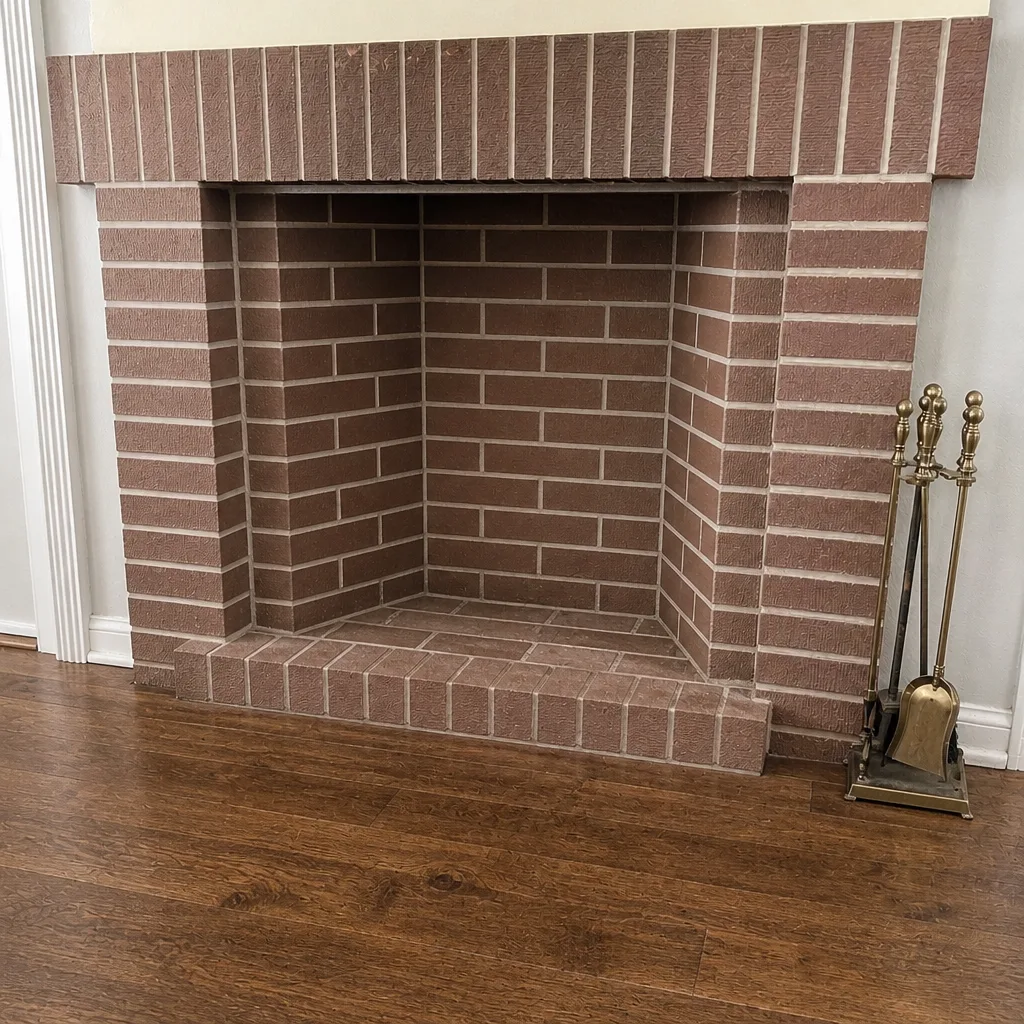
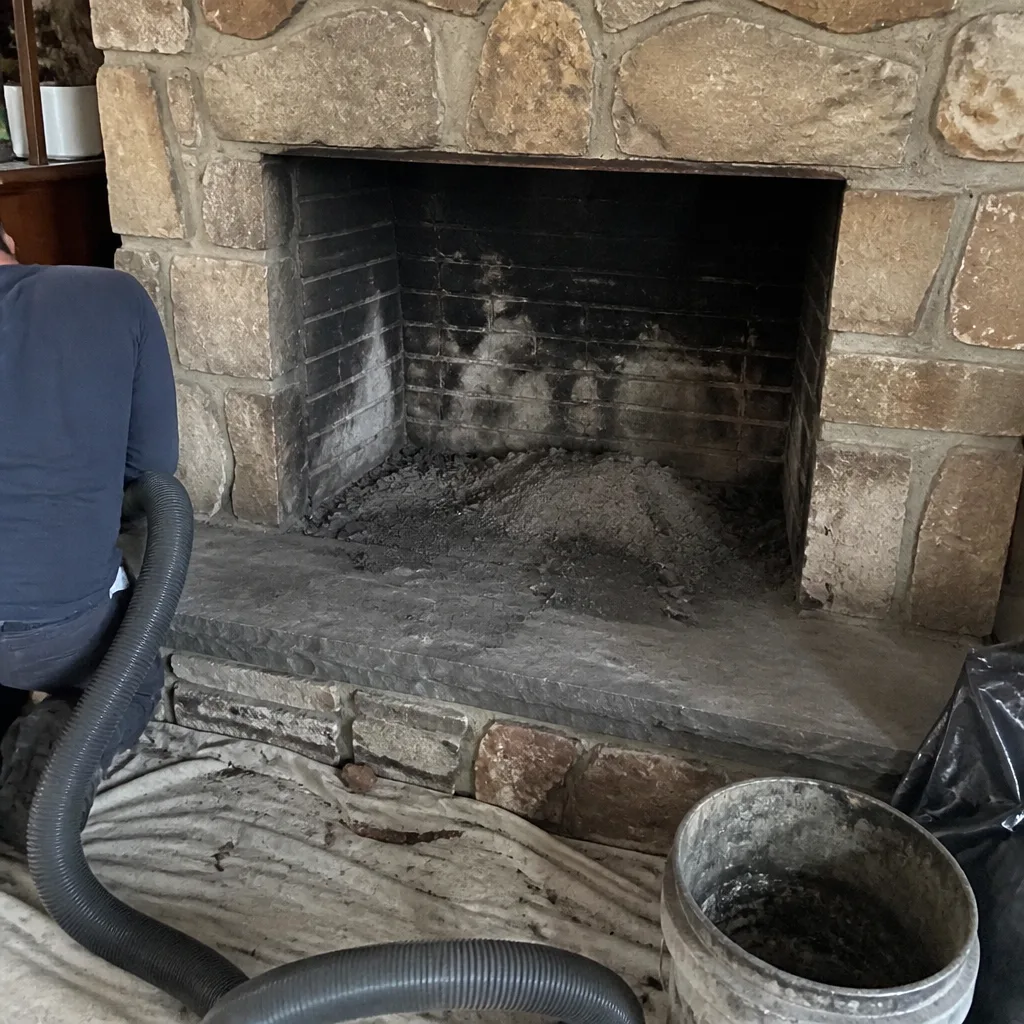
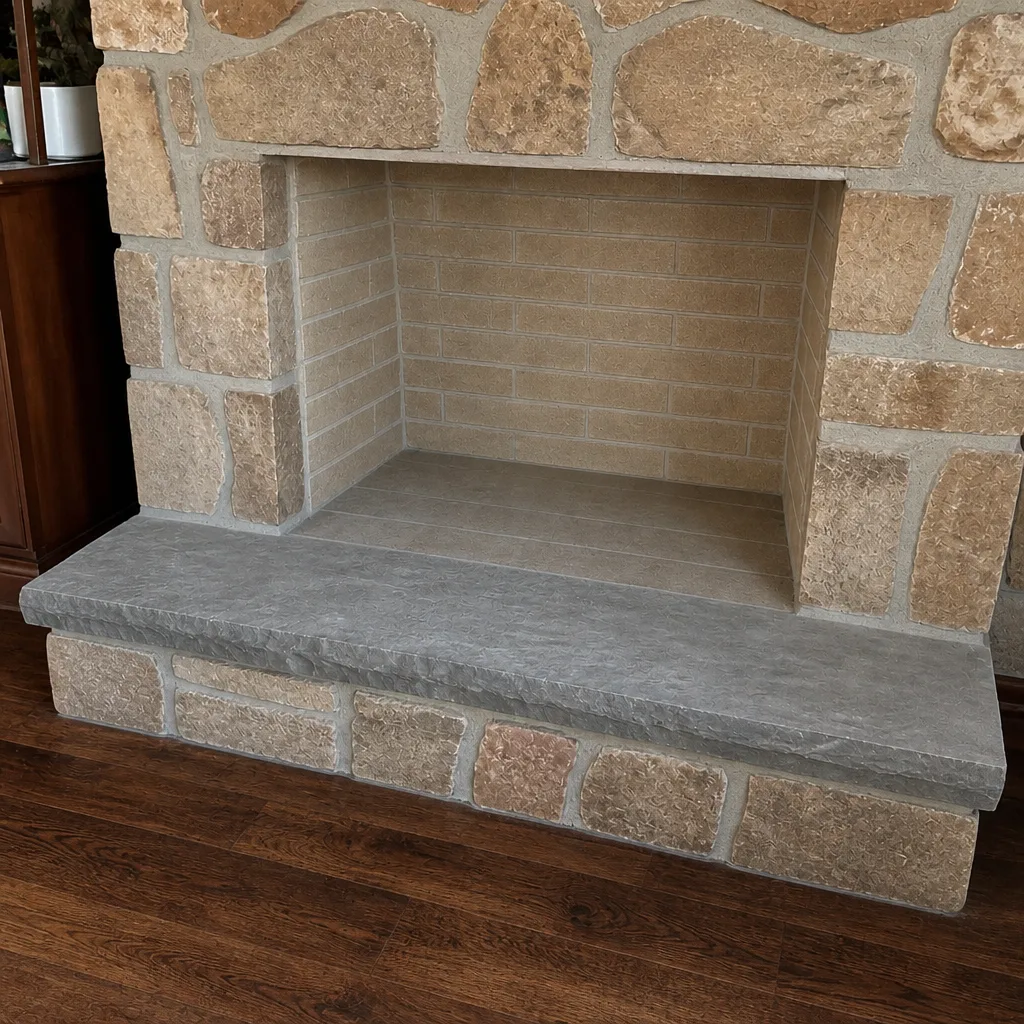
See the difference
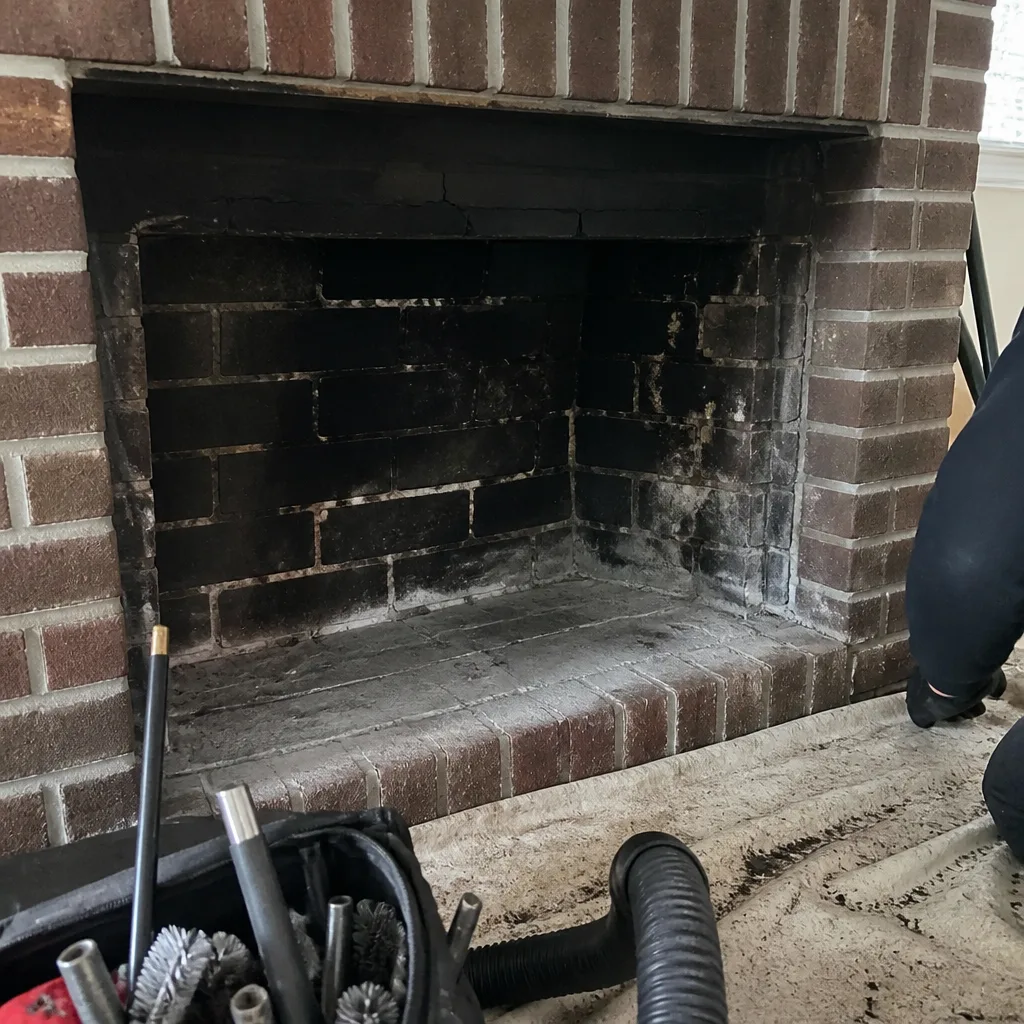 Before
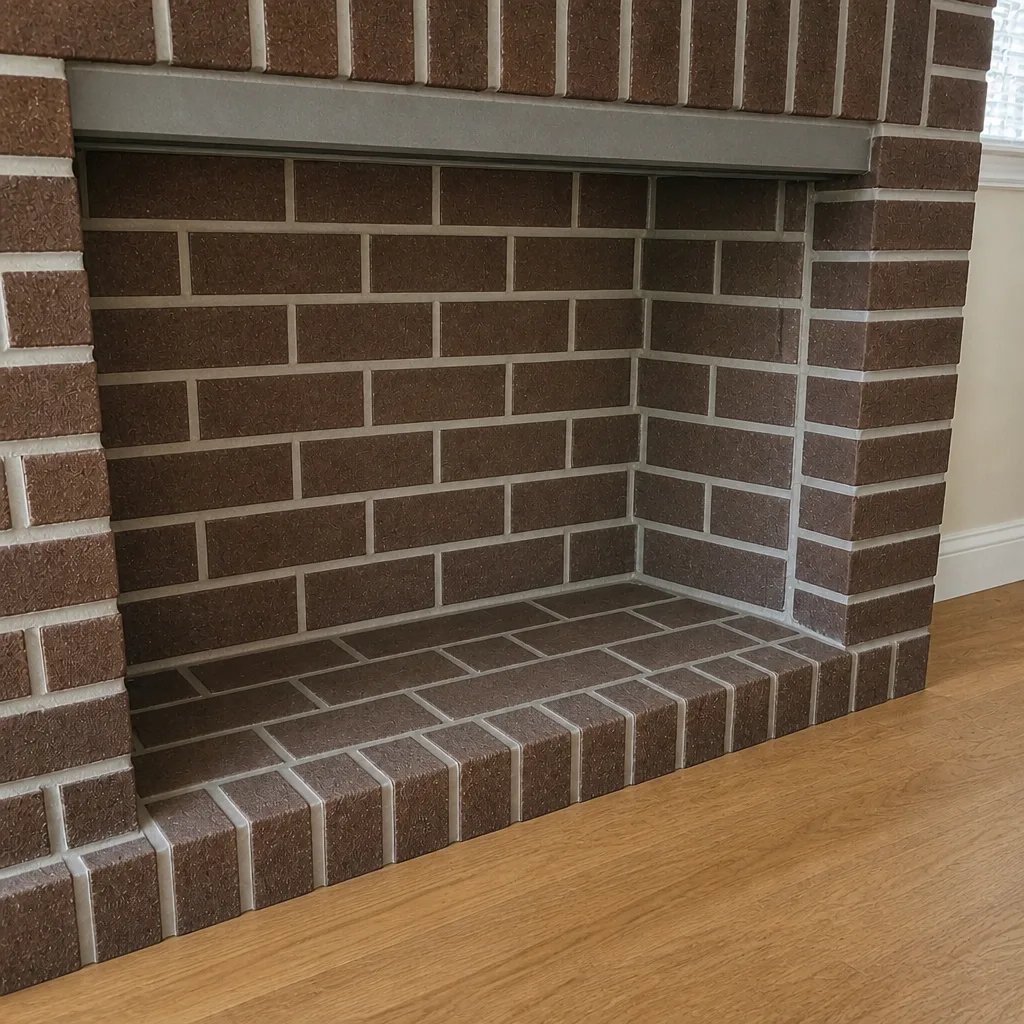 After
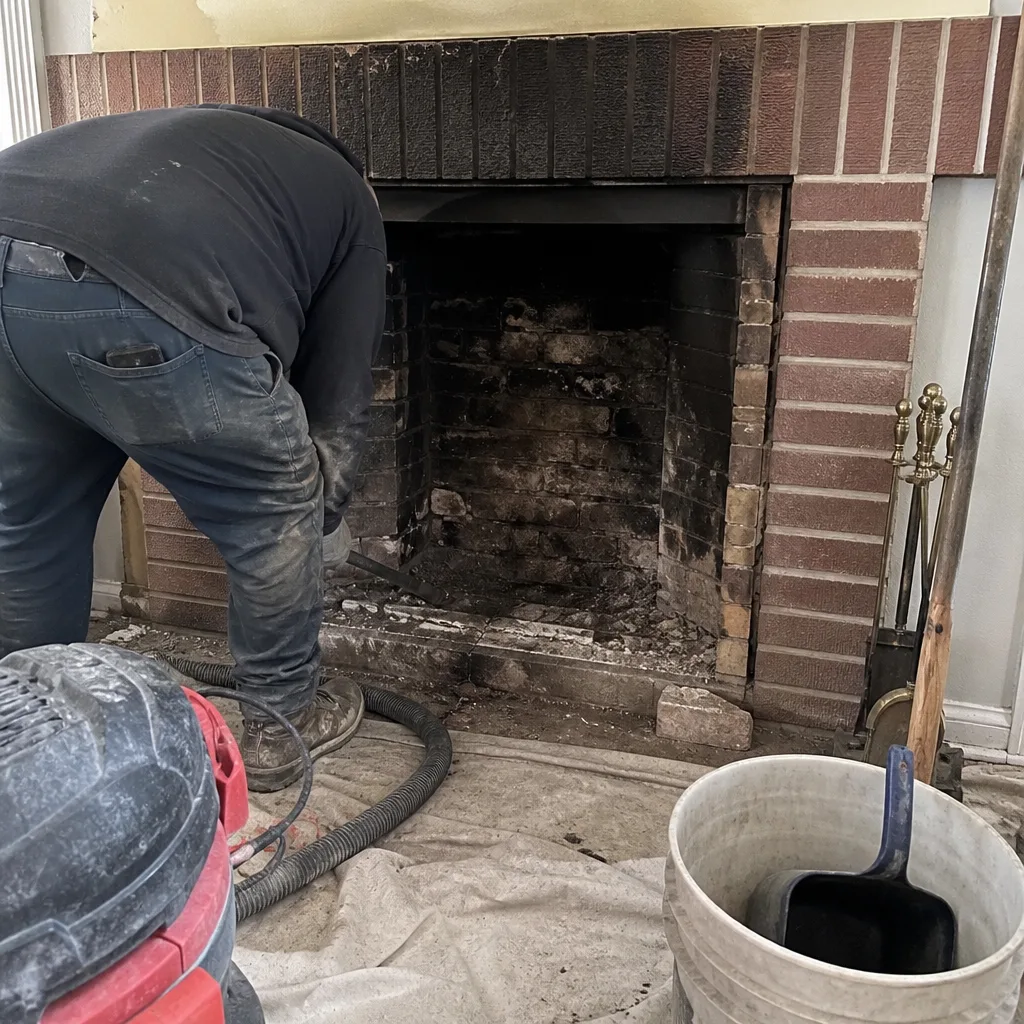 Before
 After
 Before
 After
When to Call a Professional
Call a professional when any of the stop-use signs in this guide shows up, when you see efflorescence on the stack, when you hear sounds in the flue, or when you can’t remember the last time the chimney was inspected. Call too if you’re buying a Bensonhurst home with a fireplace and don’t have a record of the flue condition, or if a storm has displaced a cap or cracked a crown. The signs that can wait for a scheduled visit are still worth booking, because the annual sweep is where most problems get caught early. Chimney Sweep Bensonhurst offers free estimates in Bensonhurst. Call (855) 924-3713. We answer 24/7. Fast dispatch from 7am to 7pm, Sunday through Friday.
Frequently Asked Questions
The most serious are a heavy shift or thud inside the flue, structural separation at the firebox, and steady smoke entering the room after the fire is established. Each points to a condition that can let heat or combustion gases reach the structure or the living space, and each means stop using the fireplace until it’s inspected. Summer odor with no fire burning is close behind, because it signals a draft reversal that can pull gases from neighboring appliances into the house. Call (855) 924-3713 for an exact assessment. Estimates are free.
A summer smell from a fireplace with no fire burning is usually a draft reversal, caused by a damper that no longer seals or a blocked cap. The chimney is pulling air down instead of pushing it up, and that brings the smell of old creosote deposits into the house. In Bensonhurst’s older rowhouses, the damper is the most common cause because decades of heat and moisture warp the plate so it no longer seats flush. It’s worth a look, because a reversing flue can also pull combustion gases from neighboring appliances. Call (855) 924-3713 for a free estimate.
Not necessarily. White staining is efflorescence, and it confirms water is moving through the masonry, but it doesn’t tell you how much damage has occurred. The repair depends on where the water is entering, which is often the crown or the flashing rather than the brick itself. A proper assessment probes the joints and checks the crown before recommending anything. If the brick face has spalled badly, more work may be needed, but you should see the evidence before agreeing to it. Call (855) 924-3713 for an exact quote. Estimates are free.
Watch the timing. Smoke that appears only in the first minute or two and clears once the fire catches is a cold-flue draft problem. Smoke that persists after the fire has burned steadily for twenty minutes or more points to a blockage, a damper that isn’t fully open, or a baffle out of position. That timing difference is the single most useful thing you can note before calling, because it tells us what to check first. Call (855) 924-3713 for an exact quote. Estimates are free.
They usually mean the clay tile liner is failing. Tapping or clicking during heat-up and cool-down points to tiles moving against a mortar joint that’s lost its grip. Flaking or gritty sliding sounds point to the inner face of a tile spalling. A single heavy thud means a tile may have dropped, which is a stop-use condition. In Bensonhurst rowhouse stacks with older clay tile liners, these sounds are worth a camera inspection before the next fire. Call (855) 924-3713 for an exact quote. Estimates are free.
A professional probes the joint and checks whether the firebrick has moved. A hairline crack in the refractory mortar with tight edges and no brick movement is usually cosmetic and gets repointed. If the brick faces are no longer flush, a brick rocks under light pressure, or there’s a gap at the perimeter of the firebox, that’s structural separation and it’s a stop-use condition until repaired. The crack width alone doesn’t settle it. Call (855) 924-3713 for an exact quote. Estimates are free.
The Bottom Line
Chimney warning signs are diagnostic, not just decorative. A summer odor means draft reversal. White staining means water is moving through the masonry. Smoke after an established fire means a blockage or a mechanical restriction. Sounds in the flue mean the clay tile liner is failing. A firebox crack with movement means stop using the fireplace. Pair each sign with its cause and its urgency, and you can triage instead of guessing. Nothing should be recommended to you without camera evidence you can see yourself, and you should be told plainly when a repair can safely wait. If you’re in Bensonhurst and any of these signs is showing up, call (855) 924-3713 for a free estimate. We answer 24/7. Fast dispatch from 7am to 7pm, Sunday through Friday.
Written by the team at Chimney Sweep Bensonhurst.